

Introduction: Why Cable Tray Selection Has Become More Important in Modern Infrastructure
Cable tray systems play a critical role in industrial electrical infrastructure, providing structured, reliable support for power, control, and communication cables.
As global electrification accelerates, electrical systems are facing unprecedented expansion. According to the International Energy Agency (IEA), global electricity demand is projected to grow by ~4% annually through 2027, while global renewable capacity is set to expand by 4,600 GW between 2025 and 2030. This rapid growth in data centers, automation, solar, wind, and energy storage facilities puts higher demands on modern cable management systems.
For engineers, contractors, and procurement teams, selecting the right cable tray is more than a dimensional check-it directly impacts installation efficiency, system safety, heat dissipation, and long-term operating costs. This guide breaks down the essential factors for choosing the ideal cable tray system for your project.
Project Requirements Assessment
Before selecting a cable tray system, evaluate the following primary parameters to prevent capacity shortages and installation bottlenecks:
Cable Specifications: Determine cable category (Power, Control, Instrumentation, Data), total quantity, outer diameters, total weight per meter, and required separation distance between power and signal lines.
Environmental & Space Constraints: Identify indoor vs. outdoor installation, vertical/horizontal routing, available support clearance, and future expansion requirements.
Industry Standards: Ensure compliance with global and regional specifications, including IEC 61537, NEMA, and UL certifications.
Cable Tray Types & Application Comparison
Select the structural type based on cable heat dissipation, weight, and protection needs:
|
Tray Type |
Core Features |
Primary Application |
|
Ladder |
Open design, maximum ventilation, high load capacity |
High-voltage power cables, power plants, heavy industry |
|
Perforated |
Balances support and moderate heat dissipation |
Control & instrumentation cables, commercial buildings |
|
Solid Bottom |
Full enclosure, maximum protection against dust/debris |
Sensitive cables requiring environmental shielding |
|
Wire Mesh |
Lightweight, quick installation, flexible routing |
Data centers, telecommunications, indoor network systems |
|
Channel |
Compact single-channel structure |
Small-scale branch wiring, tight installation spaces |
Material Selection Matrix
Match the tray material and surface treatment to your project's environment:
|
Material / Finish |
Anti-Corrosion Level |
Best For |
|
Pre-Galvanized Steel |
Basic |
Dry indoor environments, standard commercial use |
|
Hot-Dip Galvanized (HDG) |
High |
Outdoor industrial sites, high moisture environments |
|
Stainless Steel (304 / 316) |
Superior |
Food processing, chemical plants, marine applications |
|
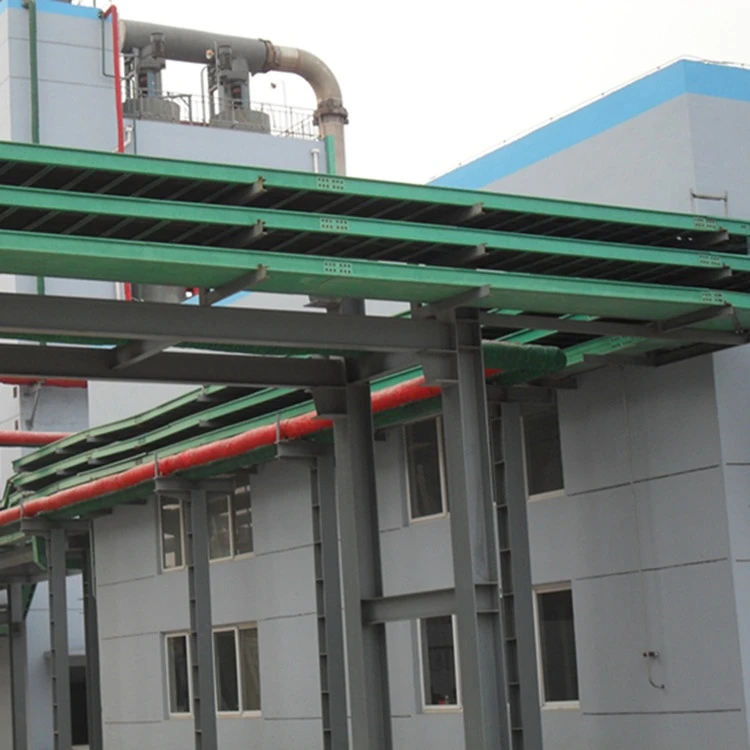
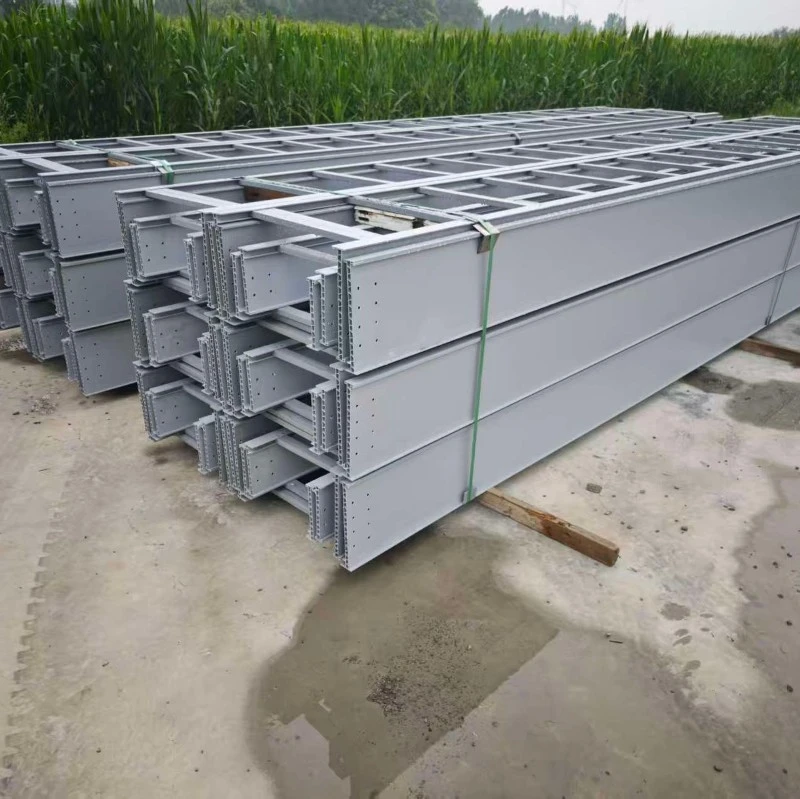
GRP / FRP (Fiberglass) |
Excellent (Non-conductive) |
Highly corrosive chemical plants, offshore & wastewater |
|
Aluminum |
High (Lightweight) |
Weight-sensitive structures, fast installation projects |
Load Capacity & Sizing Guidelines
Working Load & Support Span: Calculate total cable weight per meter against support spacing. Longer spans require higher structural profile depth.
The 40% Fill Ratio Rule: Never fill a tray completely. Reserve 50%–60% of cross-sectional space for heat dissipation, cable crossover allowance, and future capacity additions.
How to Evaluate a Cable Tray Manufacturer
To lower project risk, assess suppliers based on three core metrics
Manufacturing Capability: In-house production scale, raw material certification, and strict QA/QC protocols.
Technical Support: Provision of load capacity test reports, CAD drawings, and structural calculations.
Customization Capability: Ability to deliver non-standard dimensions, custom fittings, and specific material grades on tight lead times.